

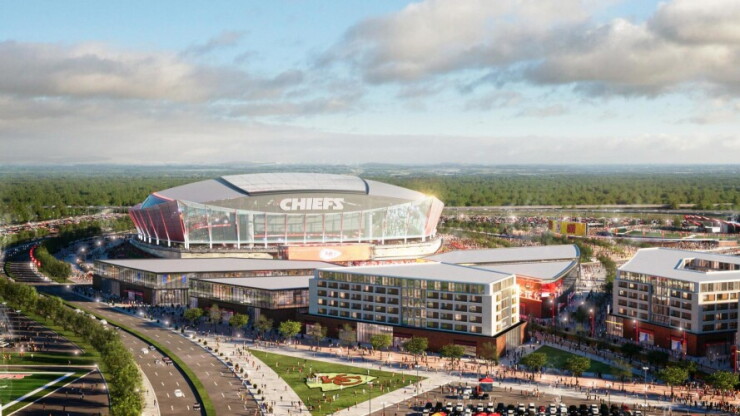
The Kansas City Chiefs’ move across the state line just got a corporate identity to match its ambition. Owner Clark Hunt’s family has formed Two-Point Development, a real estate joint venture with Hunt Midwest, to serve as master developer for the massive districts rising around the team’s future home in Kansas.
The scale of what’s being built
Two-Point Development will oversee two major projects: a roughly $3 billion domed stadium and surrounding mixed-use district in Wyandotte County, Kansas, expected to include hotels, shopping, and housing, and a separate $300 million headquarters and training facility district in Olathe built around public gathering space alongside team operations. Together, the projects represent one of the largest development pushes in the region’s recent history.
Why the name matters
The “Two-Point” branding is a deliberate nod to Chiefs founder Lamar Hunt, whose advocacy helped bring the two-point conversion into professional football in 1960 and, after a brief disappearance following the AFL-NFL merger, back into the NFL rulebook decades later. For the Hunt family, naming their new development company after a rule their patriarch fought for ties the region’s next big real estate chapter directly to the franchise’s origins.
Who’s actually building it
Hunt Midwest brings six decades of regional development experience to the partnership, including its work on SubTropolis, the sprawling underground business complex that’s become one of the area’s more distinctive commercial landmarks. Pairing that development track record with the Chiefs’ brand and financial backing gives the project a level of institutional weight that pure speculative development rarely has.
What it means for the metro
Beyond football, the stakes here are economic. State officials have pointed to thousands of potential new jobs and billions in projected economic impact tied to the stadium district, while the Kansas legislature has already approved sales tax and revenue bonds to help finance a significant share of the construction costs. For a region that’s watched other cities debate stadium relocations for years, Kansas City is now living through one in real time — office by office, rendering by rendering.
Construction on the dome itself is still years out, but with a dedicated development company now in place, the framework for exactly how that transformation happens is starting to take shape.