

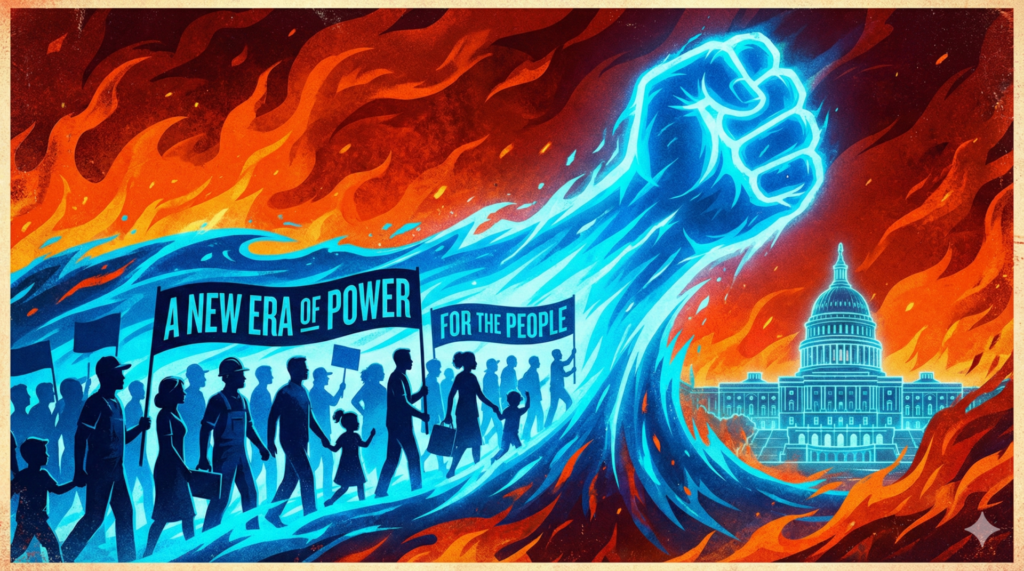
With the prospect of controlling the White House and gaining ground in Congress after the midterms, Democrats stand on the cusp of a new governing era. Yet the question is not simply whether they can win — but how they will govern once they do. For decades, the Democratic Party has been cast as the “adult in the room,” disciplined by norms, bipartisanship, and decorum, even as the political landscape grew more savage. In contrast, Republicans, particularly under Trump and MAGA populism, have embraced a rough-and-tumble strategy that thrives on spectacle, grievance, and raw emotional messaging. Democrats now face a choice: remain polite caretakers of democracy, or learn to wield power with clarity, boldness, and conviction.
To govern effectively in a new America, Democrats must do more than scold extremism — they must tell a different story. One that connects with the working class and middle-of-the-road voters who are exhausted by chaos but deeply skeptical of elites. Populism does not belong to MAGA; it is an old Democratic tradition hijacked by a new right. Democrats can recapture it by speaking directly to economic pain: lowering costs, protecting unions, regulating price gouging, investing in green jobs, protecting reproductive freedom, and defending public schools. A popular message is not radical; it is rooted in people’s daily needs.
But bold rhetoric must translate into bold governance. Major questions loom: Will Democrats finally reform or eliminate the filibuster to pass legislation supported by the majority of Americans? Will they consider expanding the Supreme Court not as political revenge, but as a rebalancing measure after partisan stacking by the right? Will they develop a foreign policy stance on Gaza that differentiates them from Republicans and reflects both justice and restraint? And will they reevaluate tariffs to ensure they uplift American workers without isolating allies?
The rise of figures like NYC Mayor Zohran Mamdani and the growing influence of Democratic socialists, including the Squad, press Democrats to share power within their own ranks. Leaders like Hakeem Jeffries and Chuck Schumer will face a strategic choice: co-opt the energy of their left flank or marginalize it at their own risk. The future of the party lies not in suppressing its boldest voices but harmonizing them into a coalition that represents a changing America.
If Democrats govern as they are poised to win — unapologetic, people-centered, and power-conscious — they may not just hold the majority. They may redefine it.