

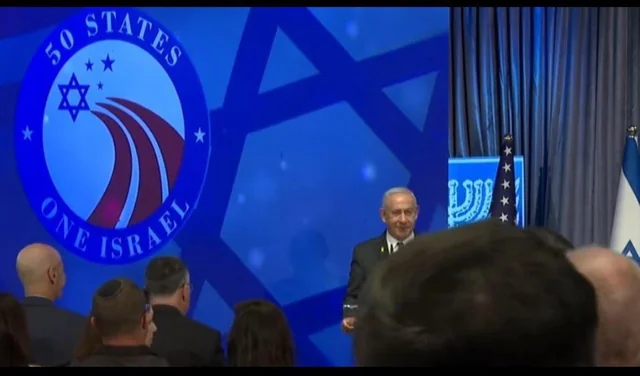
In mid-September 2025, a bipartisan delegation of 250 U.S. state legislators traveled to Israel as part of the initiative “50 States One Israel.” The visit, sponsored by the Israeli Ministry of Foreign Affairs, gathered lawmakers from every state for a week of tours, briefings, and symbolic events underscoring ties between the United States and Israel.
The delegation attended a major conference in Jerusalem where Prime Minister Benjamin Netanyahu, Foreign Minister Gideon Sa’ar, and other senior officials addressed the group. Israeli leaders urged legislators to counter the Boycott, Divestment, Sanctions (BDS) movement and pass anti-BDS measures in their home states. In a powerful symbolic moment, the legislators posed with the “50 States One Israel” sign and planted 50 trees in the Negev town of Ofakim—one representing each U.S. state. The delegation also visited communities affected by the October 7, 2023, Hamas attack, hearing firsthand accounts of the destruction and resilience that followed.
Missouri was represented by four legislators: Rep. Bishop Davidson (R), Rep. George Hruza (R), Rep. Ben Keathley (R), and Rep. Ian Mackey (D). Their participation highlighted the bipartisan nature of the delegation and Missouri’s ongoing engagement in international policy discussions.
While supporters praised the initiative as an important show of solidarity with a democratic ally, the trip has also generated debate within the United States. Critics argue that such large-scale, foreign-sponsored delegations raise concerns about the influence of Israel on U.S. politics. They note that requests for specific state legislation, such as anti-BDS bills, risk blurring the line between diplomacy and foreign lobbying. Additionally, some observers worry that these delegations place legislators in positions where they may feel pressured to adopt stances that don’t fully reflect the views of their constituents.
Proponents counter that the trip strengthens democratic ties, combats misinformation about Israel, and builds enduring partnerships that benefit both nations. They emphasize that legislators returned home with a deeper firsthand understanding of security, economic, and cultural issues.
The “50 States One Israel” initiative demonstrates how foreign policy issues increasingly intersect with state-level politics. Whether seen as bridge-building or as a sign of growing outside influence, the visit underscores Israel’s ability to engage directly with U.S. statehouses while raising important questions about transparency, lobbying, and the responsibilities of American lawmakers to balance international alliances with domestic representation.