

Rep. Tonya Rush-MO-67 Reshaping Discussion on Clarity and Accountability
By Argus Jefferson City Report
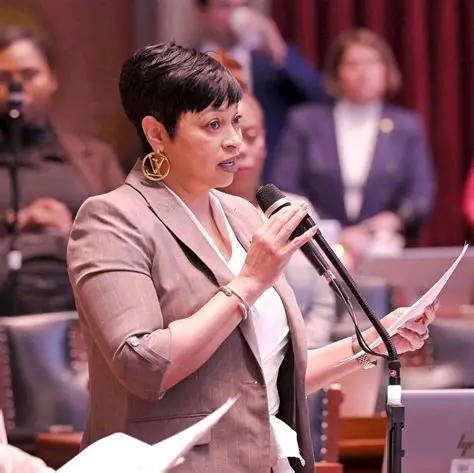
A proposal moving through the Missouri House is drawing attention for its attempt to reshape how paternity is established at the earliest stage of life.
State Representative Tonya Rush has introduced House Bill 3197, legislation that would require paternity testing at the time of a child’s birth across Missouri. The measure is being framed as a structural fix to a long-standing issue in family law—cases where paternity is assumed rather than confirmed, sometimes with lasting financial and legal consequences.
Rush, has positioned the bill as a matter of clarity and accountability. She currently serves on multiple House committees, including assignments tied to children and families, as well as areas that intersect with health and social policy—spaces where the downstream impact of paternity determinations is often most visible.
The proposal would require hospitals to implement testing at birth, creating a verified record of biological parentage before any legal or financial obligations are attached. Under current practice, paternity can be established through acknowledgment or later court proceedings, processes that in some cases have led to disputes, reversals, and prolonged litigation.
Supporters of the bill argue that establishing paternity at birth would reduce those conflicts. By confirming parentage early, the state would ensure that child support decisions are tied to verified biological relationships, not assumptions or incomplete information. The legislation also seeks to prevent enforcement actions from moving forward until that verification is complete.
Included in the bill is the creation of a funding mechanism intended to cover the cost of testing, a provision designed to remove financial barriers and ensure uniform application across hospitals and income levels. Without that component, universal implementation would likely face immediate resistance on both logistical and equity grounds.
Still, the measure is expected to generate debate as it moves through committee review. Questions around privacy, consent, and the role of government in family matters are likely to surface alongside concerns about administrative burden on healthcare providers.
At the same time, the bill taps into a broader conversation around responsibility and fairness. For some, it represents a preventive step—addressing disputes before they begin. For others, it raises questions about whether a universal mandate is the appropriate solution to what are often deeply personal circumstances.
House Bill 3197 has been read for the first time and will proceed through the legislative process in the coming weeks. Its trajectory will depend not only on policy arguments, but on how lawmakers weigh the balance between certainty, cost, and individual rights.
As it stands, the proposal signals a willingness within the General Assembly to revisit foundational assumptions in family law—starting at birth and extending into the long-term obligations that follow.