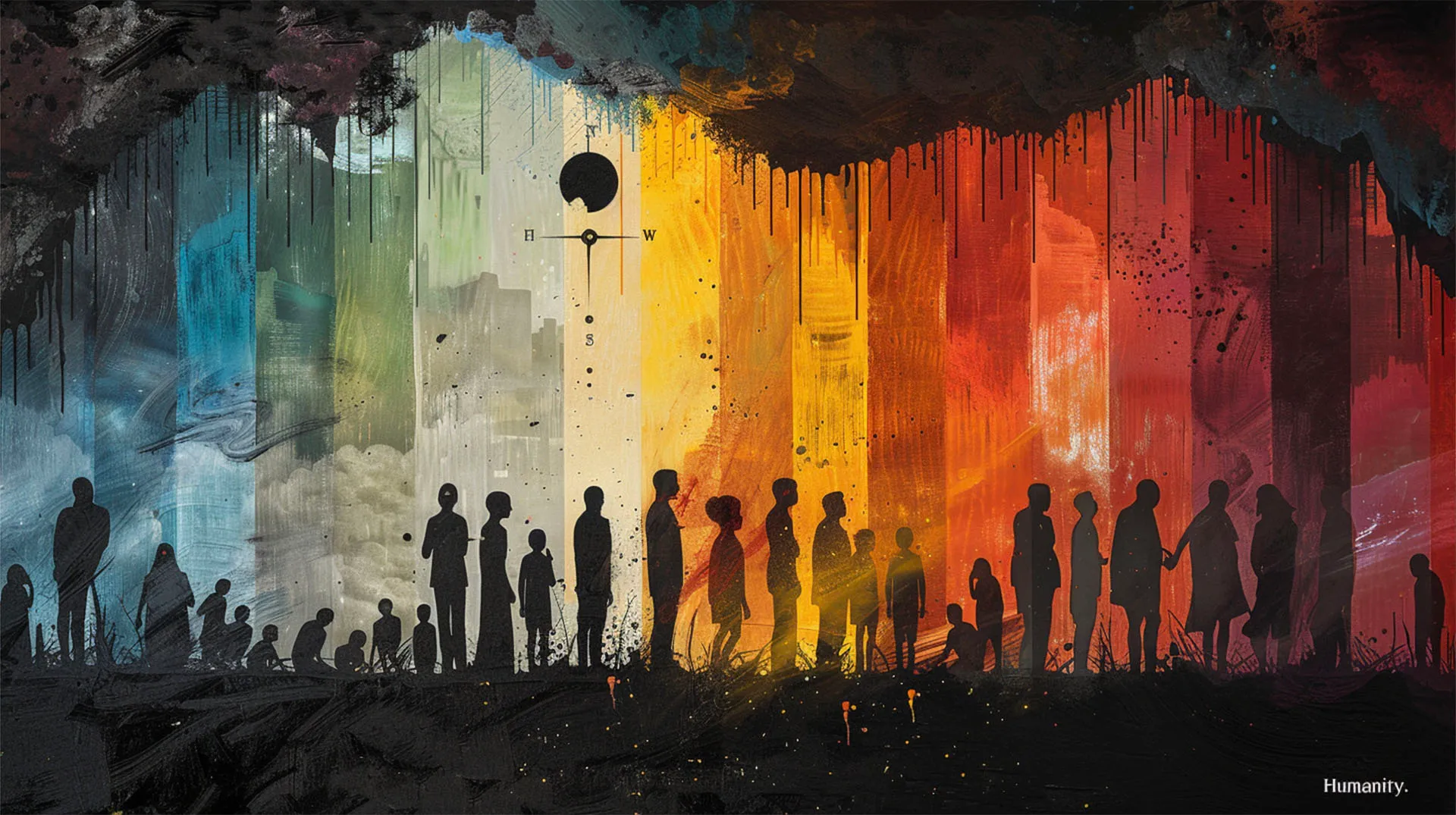

In today’s polarized climate, our public discourse increasingly demands binary choices: left or right, black or white, good or evil. Yet life, in its fullest form, exists in shades of complexity. Political ideologies, religious convictions, and even cultural values are nuanced. We can differ—and we often should. The late James Baldwin, a truth-teller of our time, once said to talk show host Dick Cavett, “We can disagree and still love each other unless your disagreement is rooted in my oppression and denial of my humanity and right to exist.”
Therein lies the line that separates opinion from inhumanity. It is one thing to debate tax policy or educational reform, but when the topic turns to genocide, there is no room for neutrality or silence.
Let us begin by defining genocide. According to Merriam-Webster, genocide is “the deliberate and systematic destruction of a racial, political, or cultural group.” The United Nations’ 1948 Convention on the Prevention and Punishment of the Crime of Genocide further clarifies it as acts committed with the intent to destroy, in whole or in part, a national, ethnical, racial, or religious group, including killing, causing serious bodily or mental harm, and deliberately inflicting conditions calculated to bring about its physical destruction.
By these definitions, the ongoing devastation faced by the Palestinian people cannot be brushed off as simply a “conflict.” This is not a partisan issue. It is not a Democrat versus Republican debate. Nor should it be categorized solely as a Jewish, Muslim, or Christian dispute. It is a human issue.
We must stop allowing people to seek refuge behind pews, pulpits, or podiums while quietly—or overtly—supporting the decimation of entire populations. One cannot sing hymns of love, pray in Arabic, Hebrew, or Latin, or quote scripture about compassion and justice, while defending, ignoring, or excusing the murder of civilians, the starvation of children, or the flattening of homes. To do so is not just hypocrisy—it is moral treachery.
You do not get to call yourself decent and only weep for those who share your skin tone, passport, or religious book. You do not get to advocate peace for your own while denying it for others. The life we cling to, with all its comforts and differences, will one day turn to dust. Only our souls—each created equal in divine likeness—will remain.
Hence, the question for our time is no longer “What side are you on?” politically or ideologically. It is this: Are you Pro-Humanity or Anti-Humanity? Do you stand with the oppressed, the suffering, the hungry, and the bombed? Or do you justify their suffering because your group isn’t the one suffering?
If you can cry for all children, not just your own; if your heart breaks at any injustice, regardless of who experiences it—then you are Pro-Humanity. But if your compassion ends where your tribe ends, then you are Anti-Humanity, and no flag, scripture, or political party can excuse that.
In a world that’s lost its moral compass, let us reclaim decency—not through ideology, but through empathy. Let us not just speak of humanity. Let us live it.