By Talibdin “TD” El-Amin, Publisher
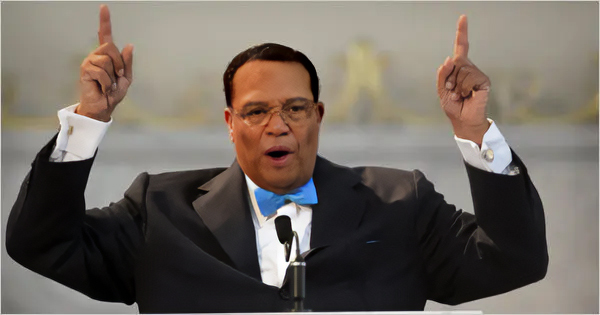
I recently came across a powerful lecture by the Honorable Minister Louis Farrakhan—one of many over the decades that brim with piercing insight and clarity. In this particular message, he addressed the dismantling of DEI (Diversity, Equity, and Inclusion) initiatives by the Trump administration. Yet it wasn’t just a critique of political winds; it was a reminder and a call to action. In response to this stripping away of DEI efforts, Minister Farrakhan offered a simple but profound alternative: DFS — Do For Self.
This is not a new idea. Our history is rich with leaders who understood the vital importance of self-determination. Marcus Garvey, the Honorable Elijah Muhammad, Malcolm X, Kwame Ture, Fred Hampton, and Huey Newton all taught that Black people must take ownership of our destiny—economically, educationally, and socially. They preached that we should not rest our hopes on the benevolence of a society dominated by White men, many of whom have proven time and again to be more committed to preserving their privilege than to justice or equality.

This brings us to what I call the age of WUL—White, Unqualified, and Loyal. We are witnessing the strategic replacement of merit-based appointments with those rooted in racial loyalty and ideological alignment. Competence is no longer the priority; conformity is. DEI was far from perfect, but it symbolized at least a gesture toward correcting historical imbalances. Now, even that gesture is being withdrawn. So what are we to do?
The answer is in DFS—Do For Self.
We’ve been taught to go where we’re appreciated, not merely tolerated. But too many of us have been lulled into comfort, forgetting the golden ages of Black self-sufficiency. We once had our own: banks, businesses, restaurants, newspapers, schools. There was a time when Black Wall Street in Tulsa, Oklahoma; Wilmington, North Carolina; and other communities across the country showcased Black excellence in commerce, culture, and community—all without dependency on mainstream systems that never fully embraced us.
We have the financial capacity to build again. But we must also summon the will.
DFS is not just a slogan. It is an imperative. It is an act of resistance. It is how we reclaim dignity and protect our future from the ever-shifting whims of political administrations. Those who feed you can also starve you. Those who elevate you without equity can also erase you without apology.
Let us use these challenging times as a wake-up call. The blessing is in the awareness—awareness that we must return to community, to self-love, to supporting and uplifting one another. It’s time to reinvest in institutions, initiatives, and infrastructures for us, by us.
Any self-respecting people would never rely entirely on others to define their worth or secure their future. And many in other communities quietly wonder: why don’t we model DFS more? Why don’t we embrace what history has already proven works?
The time is now. Let the death of DEI give birth to DFS. Let us do for self—not as isolationists, but as a people reawakening to the power of unity, self-respect, and vision.
Our ancestors did it. So can we.